

Applying a signal
Direct connection
12 things filed against this subject, in every format the Bureau holds.
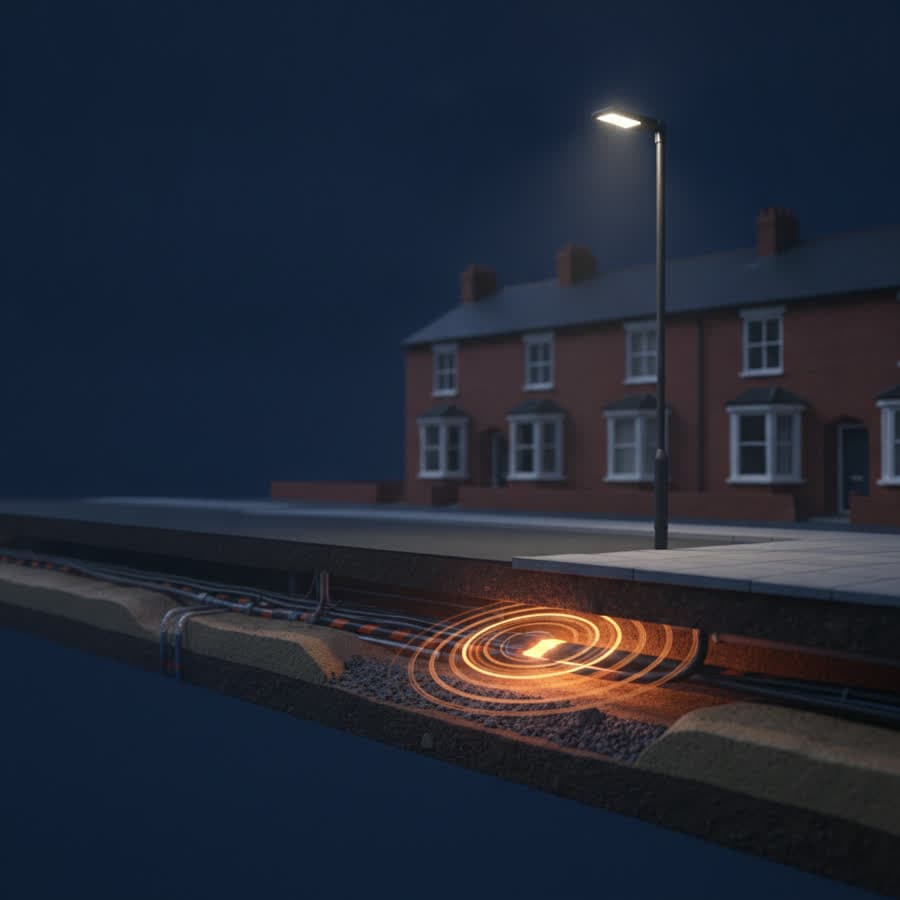
Direct Connection: Street Lighting, LV and Telecoms
Setting up and earthing the Genny4, connecting at a lighting column, what to do when the column is concrete, gas risers, and the approvals you need before a telecoms lid comes up.
Watch 6:06 →Locating HV Cables with a Genny and CAT
Techniques and the things that make HV harder than LV: where you can and cannot get a connection, what the signal does on a bonded network, and how to read what comes back.
Watch 12:40 →Getting the Best Out of Your Genny and CAT
The full webinar. Signal application from first principles: why you start with street lighting, the two ways lighting is wired, dual frequency, earthing the transmitter, induction against direct connection, and where the signal actually goes once you have applied it.
Watch 1:12:19 →The Genny First Approach Explained
Why the signal generator goes on before anything else, and what a passive-only sweep is actually telling you. The training video behind the method.
Watch 16:07 →Genny and CAT Training: The Full Run-Through
The whole method end to end in under ten minutes — pre-use checks, applying a signal, locating, pinpointing and taking a depth reading.
Watch 9:40 →The Genny First Approach, In Practice
The method walked through on real ground: where the signal goes when you connect first, and what you miss when you do not.
Read →Why You Connect the Genny First
Passive detection alone is not enough to find buried services. The Genny-first method, and why it changes what a survey is actually capable of finding.
Read →The Signal Clamp: What It Does, and When You Need One
What a signal clamp is, how it compares with direct connection and induction, and the situations on site where it finds the services the other two miss.
Read →